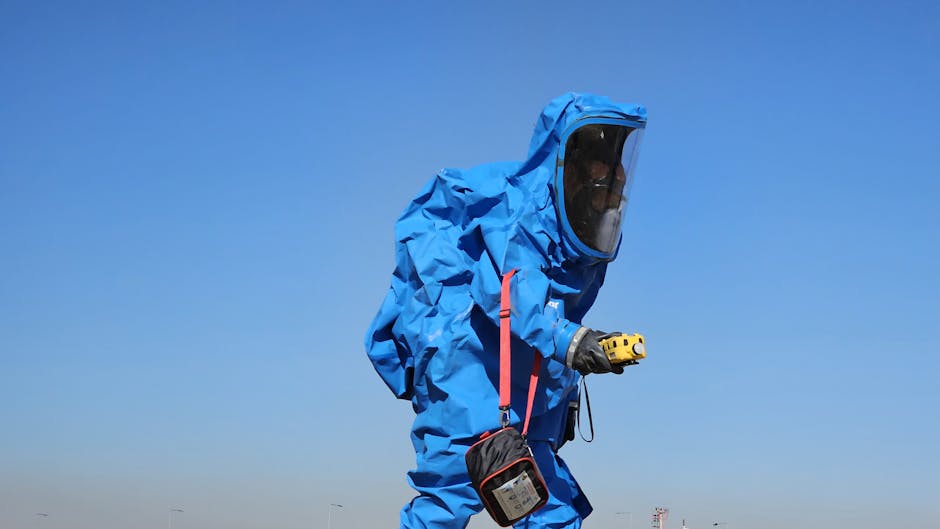
What does CBRN mean and why does it matter?
CBRN stands for Chemical, Biological, Radiological, and Nuclear. Each letter represents a class of hazardous agents that can cause injury, death, or long‑term environmental damage. In civilian and military contexts, a CBRN incident can stem from accidents, natural disasters, terrorism, or war. Because the agents act quickly and often invisible to the unaided eye, responders must rely on systematic detection, rapid decontamination, and sound decision‑making to protect lives and infrastructure.
How are CBRN agents detected in the field?
Detection is the first step in any response. It establishes whether an agent is present, identifies its type, and provides an estimate of concentration. Modern CBRN detection can be split into three categories: sensor‑based detection, sample analysis, and visual/olfactory cues.
Sensor‑based detection
Hand‑held and vehicle‑mounted sensor suites dominate field detection. They usually combine several detection principles to reduce false alarms.
- Ion mobility spectrometry (IMS) – measures the drift time of ionized particles; effective for many chemical warfare agents (CWAs) and industrial toxins.
- Fourier‑transform infrared spectroscopy (FT‑IR) – identifies molecular bonds by their infrared absorption patterns; useful for a broad range of chemicals.
- Raman spectroscopy – provides a molecular fingerprint with minimal interference from water; increasingly common in portable units.
- Real‑time radiological detectors – Geiger‑Müller tubes, scintillation counters, and semiconductor detectors measure ionizing radiation and help differentiate between gamma, beta, and neutron sources.
- Biological agent detectors – rely on immunoassays, polymerase chain reaction (PCR) cartridges, or enzyme‑linked immunosorbent assays (ELISA) that can identify pathogens within minutes to an hour.
Most modern kits integrate these technologies and present a single read‑out: “agent detected,” “type,” and “estimated concentration.” The user interface often includes audible alerts and GPS tagging for later analysis.
Sample collection and laboratory analysis
When sensor data are ambiguous or when legal documentation is required, responders collect samples for confirmatory lab work.
- Swab and filter media for liquids or solids – placed in sealed containers and sent to a certified CBRN laboratory.
- Air sampling pumps – draw a known volume of air through charcoal or gel filters; later analyzed by gas chromatography‑mass spectrometry (GC‑MS) or liquid chromatography‑mass spectrometry (LC‑MS).
- Water and soil sampling kits – follow standard protocols (e.g., EPA Method 525) to preserve sample integrity.
Lab turnaround varies from a few hours (rapid PCR) to several days (full spectrum GC‑MS), so field detection remains the primary decision driver.
Visual and olfactory clues
Although technology dominates, experienced responders still watch for tell‑tale signs:
- Unusual vapour clouds, discoloration, or foaming.
- Characteristic odors (e.g., “garlic” for organophosphates, “sweet” for certain cyanides).
- Immediate health effects on personnel (skin irritation, coughing, tearing).
These clues can trigger a “suspect” alert, prompting immediate protective measures while sensor data load.
What are the key steps in CBRN decontamination?
Decontamination removes or neutralises agents from people, equipment, and the environment. The process follows a structured sequence: protect, contain, decontaminate, and verify. Each phase has distinct goals and recommended methods.
Protect personnel and equipment
Before any decontamination begins, responders don appropriate personal protective equipment (PPE). The level of PPE depends on the identified or suspected agent:
- Level A – fully encapsulated suit with self‑contained breathing apparatus (SCBA); used for unknown or highly toxic agents.
- Level B – SCBA with chemical‑resistant clothing; applied when the agent is known and skin exposure risk is low.
- Level C – air‑purifying respirators with splash‑proof garments; suitable for lower‑risk situations.
Equipment such as radios, cameras, and medical devices are protected with disposable covers or placed in sealed containers.
Contain the contaminated area
Containment prevents spread during decontamination. Common tactics include:
- Physical barriers – inflatable seams, plastic sheeting, or portable fencing.
- Ventilation control – temporary HVAC shutdown, directional fans, or exhaust filters to limit aerosol migration.
- Isolation zones – “hot,” “warm,” and “cold” zones that delineate levels of contamination and dictate PPE requirements.
Decontaminate people
The primary goal for human decontamination is to reduce skin absorption and inhalation hazards while preserving life‑saving medical treatment.
- Gross decontamination – rapid removal of visible contaminants using water showers or high‑pressure hoses. A typical flow rate is 150 L/min for a single‑person shower, applied for 2–5 minutes.
- Technical decontamination – use of specific reagents (e.g., 2% alkaline solution for sulfur mustard, hypochlorite for organophosphates) applied in controlled concentrations. Timing is critical; over‑exposure to reagents can cause secondary injury.
- Medical decontamination – when agents are systemic (e.g., nerve agents), antidotes such as atropine, pralidoxime, or ribavirin are administered alongside physical cleaning.
Decontaminate equipment and vehicles
Equipment decontamination follows a similar three‑step approach but adds the need to protect functionality.
- Rinse and scrub – high‑pressure water (≥100 psi) with non‑reactive detergents removes bulk contamination.
- Reagent application – for agents that bind to metal or polymer surfaces, a brief soak in a neutralizing solution (e.g., 0.5% sodium hypochlorite) may be required.
- Drying and verification – forced‑air drying prevents corrosion; subsequent wipe testing with indicator paper or portable analyzers confirms residual levels are below actionable limits.
Environmental decontamination
Large‑scale environmental cleanup often involves specialized teams and equipment. Common methods include:
- Soil excavation and off‑site treatment – used when contamination depth exceeds 0.3 m or when agents have strongly adsorbed to soil particles.
- In‑situ chemical neutralisation – application of oxidising agents (e.g., potassium permanganate) to degrade organics without moving material.
- Water treatment – activated carbon filtration or advanced oxidation processes (AOPs) for contaminated runoff.
Verification and release criteria
Decontamination is complete only when verified measurements show agent concentrations below pre‑established release thresholds. These thresholds differ by jurisdiction but generally follow occupational exposure limits (OELs) or emergency response standards. Verification tools include:
- Hand‑held detector swabs (e.g., ATP‑based rapid assay for biological agents).
- Surface wipe samples sent for lab analysis.
- Real‑time air monitors placed in the “cold” zone.
Only after three consecutive readings below the limit, taken at 5‑minute intervals, are personnel and equipment cleared to re‑enter the area.
How do responders make decisions during a CBRN incident?
Decision‑making in CBRN response balances speed, accuracy, and safety. The process is guided by three interlocking frameworks: the Incident Command System (ICS), risk assessment matrices, and standard operating procedures (SOPs) specific to CBRN.
Incident Command System – who decides what?
ICS provides a hierarchical structure that assigns clear roles:
- Incident Commander (IC) – ultimate authority; integrates intelligence from detection, medical, and logistics sections.
- Operations Section – directs on‑scene actions (e.g., decontamination lines, perimeter security).
- Planning Section – gathers data, updates incident action plans, and forecasts resource needs.
- Logistics Section – supplies PPE, decontamination agents, and transport.
- Safety Officer – monitors ongoing hazards and can halt activities if conditions exceed safe limits.
Because CBRN incidents evolve rapidly, the IC conducts a “briefing cycle” every 30 minutes to reassess priorities.
Risk assessment and mitigation
Risk is evaluated as Likelihood × Consequence. Responders use pre‑published matrices that rank likelihood (e.g., “confirmed,” “suspected,” “unlikely”) against consequence (e.g., “minor injury,” “mass casualties,” “environmental disaster”).
Example matrix excerpt:
| Likelihood | Consequence | Risk Level |
|---|---|---|
| Confirmed | Mass casualties | Critical |
| Suspected | Minor injury | Moderate |
| Unlikely | Environmental impact | Low |
When risk reaches “Critical,” the IC may order evacuation, mass prophylaxis, or a full‑scale decontamination of the affected zone.
Standard operating procedures and checklists
Every responder unit carries a CBRN SOP manual. SOPs break down complex actions into checklists, reducing reliance on memory under stress. A typical decontamination SOP contains:
- Initial safety assessment.
- Establish hot, warm, cold zones.
- Deploy PPE according to zone.
- Activate decontamination line – water flow, temperature, reagent concentration.
- Perform medical triage concurrently.
- Collect verification samples.
- Document all actions in the Incident Action Log.
Checklists are often laminated and mounted on decontamination rigs for quick reference.
Information flow and communication
Effective decisions depend on reliable information. Communication pathways include:
- Radio nets – designated frequencies for CBRN, separate from general emergency traffic to avoid congestion.
- Secure data links – encrypted laptops that transmit detector readouts and GPS coordinates to the planning staff.
- Public Information Officer (PIO) – crafts messages for civilians, balancing transparency with operational security.
All messages use pre‑approved terminology (e.g., “agent X detected at Level 2 concentration”) to avoid misinterpretation.
What are common challenges and how can they be mitigated?
Even with robust procedures, responders encounter practical obstacles.
False positives and sensor saturation
Highly contaminated environments can overload detectors, causing “dead zones.” Mitigation includes rotating sensors, using multiple detection principles, and confirming with sample analysis before initiating large‑scale actions.
Limited decontamination resources
In mass‑casualty scenarios, the number of showers or portable decontamination units may be insufficient. Strategies:
- Implement “tiered decontamination” – gross decontamination on‑site, followed by secondary decontamination at a staging area.
- Prioritise high‑risk individuals (e.g., those with visible contamination or severe exposure symptoms).
- Use improvised methods such as fire‑hose “spray‑and‑go” where conventional rigs are unavailable.
Decision fatigue under time pressure
Rapidly evolving data can overwhelm the IC. Countermeasures:
- Delegate authority to “branch‑team leaders” for specific tasks (e.g., medical, logistics).
- Employ decision‑support software that visualises sensor data, resource status, and risk matrix outputs.
- Schedule short “decision pauses” of 2–3 minutes after each major action to reassess.
Inter‑agency coordination
CBRN incidents often involve local fire, EMS, public health, law‑enforcement, and sometimes federal agencies. Clear memoranda of understanding (MOUs) and joint training exercises reduce confusion. Practical steps:
- Use a common incident numbering system.
- Adopt a unified command structure when multiple agencies share authority.
- Conduct joint after‑action reviews to capture lessons learned.
How do lessons learned shape future CBRN preparedness?
Post‑incident analysis feeds back into training, equipment procurement, and policy revision.
- After‑action reports document timeline, detection accuracy, decontamination effectiveness, and decision points.
- Scenario‑based drills incorporate discovered gaps – for example, adding a “re‑contamination” module if agents were found on equipment after initial clearance.
- Technology updates are driven by performance data; sensors that showed sluggish response may be replaced with next‑generation models.
- Policy changes may adjust release thresholds, PPE levels, or the composition of decontamination teams based on real‑world outcomes.
Continuous improvement ensures that when the next CBRN event occurs, responders act faster, safer, and with greater confidence.
