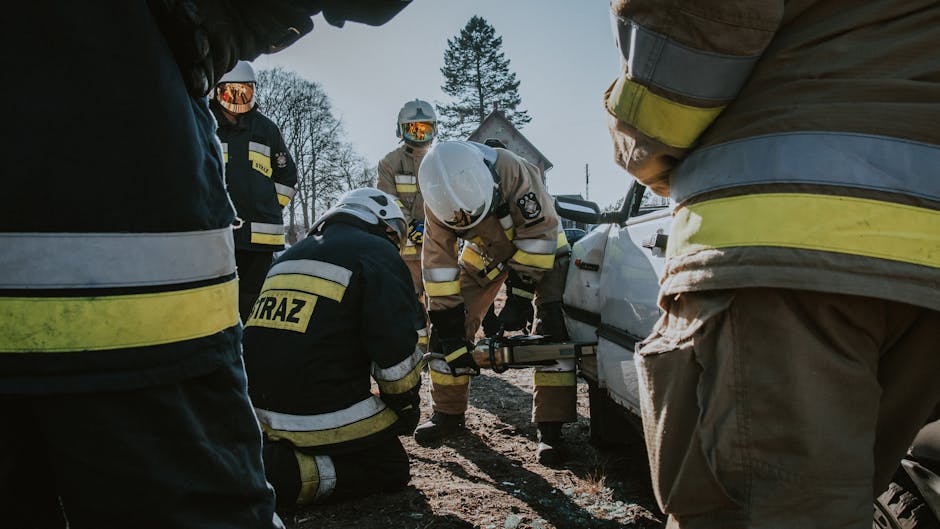
What do we mean by CBRN terrorism and hazardous accidents?
CBRN is an acronym for Chemical, Biological, Radiological, and Nuclear. In the context of terrorism, it refers to the intentional release or use of agents from any of those four categories to cause mass harm, panic, or political damage. A CBRN terrorist attack is planned, coordinated, and directed toward a specific target or population.
A hazardous accident, on the other hand, is an unplanned event that results from equipment failure, human error, natural forces, or a combination of those factors. The incident may involve the same agents—chemical spills, radiological leaks, or biological releases—but the cause is accidental rather than deliberate.
Both scenarios can produce similar physical effects—injury, contamination, evacuation—but the underlying motivations, legal frameworks, and operational priorities differ enough to require distinct response structures.
How do legal and policy frameworks diverge?
Because CBRN terrorism is a criminal act, domestic law, international terrorism conventions, and counter‑terrorism policies guide the response. In the United States, for example, the FBI leads the investigative side, while the Bureau of Alcohol, Tobacco, Firearms and Explosives (ATF) and the Department of Homeland Security (DHS) manage the tactical and security aspects.
Hazardous accidents fall under occupational safety, environmental protection, and public health statutes. Agencies such as the Occupational Safety and Health Administration (OSHA), the Environmental Protection Agency (EPA), and the Centers for Disease Control and Prevention (CDC) have primary jurisdiction.
The legal distinction matters for three reasons:
- Evidence preservation: Investigators must protect potential criminal evidence in a terrorist event, which can limit certain decontamination actions.
- Information sharing: Counter‑terrorism intelligence is often compartmentalized; agencies may exchange data under different protocols than those used for accident reporting.
- Liability and compensation: Victims of a terrorist attack may have access to different compensation funds and legal remedies than those harmed by an industrial mishap.
Who takes the lead on the ground?
Both situations involve a multi‑agency response, but the command hierarchy shifts.
CBRN terrorism
- Incident Command System (ICS) – Terrorism Branch: The FBI’s Hostage Rescue Team (HRT) or Special Weapons and Tactics (SWAT) units often assume the Incident Commander (IC) role when an active CBRN attack is in progress.
- Joint Terrorism Task Forces (JTTFs): These groups embed federal, state, and local law‑enforcement officers to coordinate investigation and evidence collection.
- Public Health Coordination: The CDC’s Office of Public Health Preparedness and Response (OPHPR) supports medical triage and disease surveillance, but it does not lead the operational scene.
Hazardous accidents
- Incident Command System – Emergency Operations Branch: The local fire department or hazardous materials (HAZMAT) unit typically assumes the IC role, emphasizing safety and containment.
- Environmental and Occupational Agencies: OSHA and EPA representatives arrive as technical advisors, focusing on worker protection and environmental remediation.
- Public Health Agencies: State or local health departments take the lead on medical monitoring, especially when a chemical or biological agent could affect the broader community.
What changes in the tactical approach?
Both response types use personal protective equipment (PPE), decontamination stations, and exclusion zones, yet the way these tools are deployed reflects the underlying mission.
Threat assessment and intelligence gathering
In a terrorist incident, responders must assume that the attacker may still be present, that secondary devices could exist, and that the choice of agent might be intended to overwhelm detection systems. This leads to a “search and secure” posture before extensive decontamination.
During an accident, the primary concern is the ongoing release of material. The focus is on stopping the source, ventilating the area, and limiting exposure. The likelihood of a hidden secondary threat is low, so resources can move more quickly to containment.
Use of specialized teams
CBRN terrorist scenes often bring in National CBRN Defense Teams, which have capabilities for remote detection, high‑level decontamination, and forensic sampling. They also have law‑enforcement liaison officers who document evidence for prosecution.
Hazardous accident scenes rely heavily on Industrial HAZMAT teams and Emergency Medical Services (EMS) with chemical‑exposure training. Their objective is rapid rescue and mitigation rather than evidence preservation.
Decontamination priorities
In a terrorist attack, authorities may delay mass decontamination to preserve forensic samples. They might set up a “staged” process: first, isolate suspects and collect swabs; second, perform limited decontamination for rescuers; third, conduct full decontamination for the public.
During an accident, the priority is to get victims to clean medical facilities as fast as possible. Full‑scale decontamination lines are activated immediately, even if that means sacrificing some trace evidence.
How does communication with the public differ?
Both scenarios require clear messaging, but the tone and content reflect divergent goals.
- Risk framing: Terrorist messaging emphasizes the intentional nature of the threat, often heightening fear. Responders must balance honesty about the danger with reassurance that law‑enforcement is neutralizing the perpetrator.
- Information control: Counter‑terrorism operations may withhold certain details—e.g., the exact type of agent or location of a bomb—to protect investigative integrity. Accident reports can be more transparent because there is no need to conceal an ongoing investigation.
- Community outreach: After a terrorist event, authorities may involve community leaders to counter radicalization narratives. After an industrial spill, the focus is on environmental impact, health monitoring, and compensation pathways.
Medical management: similarities and divergences
Medical response teams treat exposure, burn, inhalation, and infection in both contexts, but the protocols diverge when it comes to triage, treatment, and follow‑up.
Immediate care
- Terrorist attack: EMS crews operate under “hot zone” conditions with limited PPE until a safety sweep is completed. They often treat patients as potential secondary‑device victims, using rapid evacuation to safe zones.
- Accident: EMS may have more leeway to enter the hot zone once the source is shut down. They can focus on stabilizing chemical burns or managing radiation sickness without the same level of threat of additional devices.
Decontamination of patients
In terrorist incidents, hospitals may receive patients still contaminated because full decontamination cannot wait. This forces hospitals to have isolation rooms, on‑site decontamination showers, and strict entry protocols.
After accidents, patients are usually decontaminated at the scene or at dedicated staging areas before transport, reducing the burden on hospitals.
Long‑term health monitoring
Both scenarios may require registries to track chronic effects—cancers from radiation, respiratory disease from chemicals, or delayed infections from biological agents. However, terrorist‑related registries often include psychological trauma assessments linked to the intentional nature of the event.
Logistics and resource allocation
Resource management differs because the perceived “enemy” influences how assets are prioritized.
- Equipment pre‑positioning: Many nations keep dedicated CBRN response caches near high‑value targets (airports, stadiums) for terrorism. Accident response relies more on industrial site‑specific inventories.
- Mutual‑aid agreements: Terrorism triggers national-level assistance (e.g., FEMA in the U.S.) under the Stafford Act. Accidents may invoke state‑level emergency management or EPA emergency response plans.
- Supply chain constraints: Terrorist events can lead to broader security lockdowns, affecting the flow of medical supplies, decontamination chemicals, and PPE. Accident response usually proceeds without such restrictions.
Training and preparedness: why the curricula diverge
First responders undergo separate modules for “CBRN terrorism” and “hazardous materials incidents.” The distinctions are reflected in certification standards.
- National Fire Protection Association (NFPA) 472 vs 470: NFPA 472 focuses on terrorist threats, emphasizing scene security, evidence preservation, and coordination with law‑enforcement. NFPA 470 addresses hazardous materials, concentrating on technical control, worker safety, and environmental protection.
- Joint Terrorism Training Exercise (JTTX):* *These drills simulate active shooter or bomb scenarios combined with CBRN release, forcing participants to practice multi‑agency command and evidence handling.
- Industry‑specific safety drills: Chemical plants, nuclear facilities, and biotech labs conduct “loss‑of‑containment” exercises that prioritize rapid shutdown and containment without a law‑enforcement overlay.
Post‑incident investigation: forensic vs corrective focus
After a terrorist CBRN attack, the primary goal is to identify perpetrators, trace the source of the agent, and build a legal case. This drives a forensic approach:
- Sample collection from surfaces, air, and victims is done with chain‑of‑custody documentation.
- Video and sensor data are preserved for court admissibility.
- Law‑enforcement analysts conduct “link analysis” to connect the attack to known extremist networks.
Following a hazardous accident, the emphasis shifts to root‑cause analysis and prevention:
- Investigators examine equipment logs, maintenance records, and human‑error factors.
- Regulatory bodies may issue citations, fines, or corrective action orders.
- Lessons learned are fed back into industry standards, such as updates to OSHA’s Process Safety Management (PSM) rule.
International cooperation and standards
Both terrorism and accidents trigger cross‑border assistance, but the frameworks differ.
CBRN terrorism
The United Nations Security Council Resolution 1540 and the Organization for the Prohibition of Chemical Weapons (OPCW) set obligations for preventing the acquisition of CBRN weapons. In an attack, states may invoke the International Health Regulations (IHR) to share disease‑related data, but they also activate mutual‑defense agreements like NATO’s Article 5 if the attack is deemed an act of war.
Hazardous accidents
The International Atomic Energy Agency (IAEA) provides guidance for nuclear accidents (e.g., the IAEA Incident and Emergency Centre). For chemical spills, the International Maritime Organization (IMO) and the European Agreement concerning the International Carriage of Dangerous Goods by Road (ADR) set transport safety standards. Assistance is coordinated through the International Emergency Response System (IERS) rather than security channels.
Cost implications and insurance considerations
Insurance policies differentiate between “acts of terrorism” and “industrial accidents.” A terrorism endorsement typically excludes coverage for intentional wrongdoing unless a government backstop (such as the U.S. Terrorism Risk Insurance Act) is in place. Accident insurance covers property damage, business interruption, and third‑party liability, but it often excludes contamination that exceeds statutory limits.
From a budgeting perspective, governments allocate separate funds:
- Counter‑terrorism budgets fund detection equipment, intelligence, and rapid‑response tactical units.
- Emergency management budgets fund HAZMAT teams, spill containment resources, and environmental remediation programs.
Key takeaways for responders and planners
- Recognize the legal driver: terrorism invokes law‑enforcement‑led command; accidents are led by fire/HAZMAT agencies.
- Adjust tactical priorities—preserve evidence first in terrorism, contain the release first in accidents.
- Tailor public communication to reflect the threat’s nature while maintaining transparency.
- Maintain separate but interoperable training tracks to avoid confusion during a mixed‑cause event.
- Plan logistics with both security lockdowns and unrestricted supply chains in mind.
