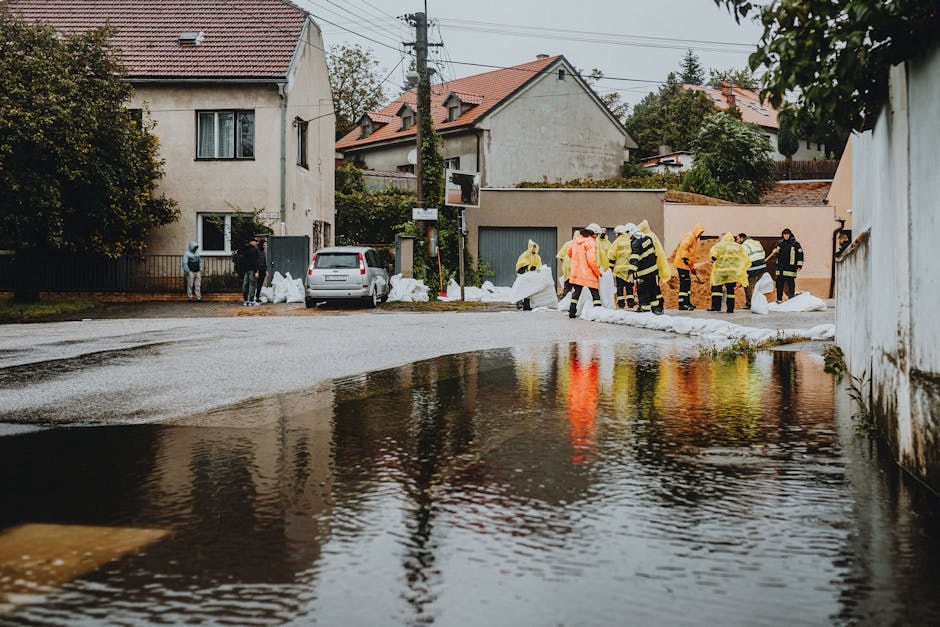
Why do rare, high‑impact events matter?
When a low‑probability, high‑consequence event occurs, the damage often exceeds what ordinary public services can absorb. Floods that break historic levees, a sudden volcanic eruption, a pandemic caused by a novel pathogen, or a massive cyber‑attack on critical infrastructure are all examples. Even though each event may happen once in a generation, the social, economic, and psychological costs can last for decades. This reality drives the need to understand what makes a society able to survive, recover, and adapt when such shocks strike.
Core components of societal resilience
Resilience is not a single attribute; it is a network of inter‑related capacities. Researchers and practitioners commonly break it down into four pillars: preparedness, robustness, adaptability, and learning. Each pillar rests on concrete institutions, policies, and behaviours.
1. Preparedness – knowing what could happen and planning for it
- Risk identification. Accurate hazard mapping, scenario analysis, and vulnerability assessments provide the factual basis for any response.
- Early‑warning systems. Sensors, satellite data, and community‑level alert mechanisms give people the time needed to take protective actions.
- Resource pre‑positioning. Stockpiles of food, medicine, water, and shelter kits placed strategically reduce logistical bottlenecks.
- Training and drills. Regular exercises for emergency responders, utilities, and the public keep skills sharp and reveal procedural gaps.
2. Robustness – building strength into critical systems
- Redundant infrastructure. Multiple, geographically separated power plants, communication nodes, or transport routes prevent a single failure from crippling the whole system.
- Physical hardening. Flood barriers, earthquake‑resistant construction, and fire‑proof building codes raise the threshold at which damage occurs.
- Supply‑chain diversification. Sourcing essential goods from several suppliers and maintaining domestic production capacity limits exposure to external disruptions.
- Financial buffers. Emergency funds, insurance schemes, and contingency budgets enable rapid mobilisation of resources without waiting for ad‑hoc appropriations.
3. Adaptability – the ability to change course under stress
- Flexible governance. Legal frameworks that allow rapid reallocation of personnel, temporary suspension of routine regulations, and fast‑track procurement keep response actions agile.
- Community empowerment. When neighbourhood groups can organise relief, distribute aid, and make local decisions, the system as a whole reacts faster.
- Scalable services. Health, shelter, and logistics systems that can expand or contract based on demand avoid the “all‑or‑nothing” trap of fixed capacity.
- Technology integration. Open‑source platforms, mobile applications, and real‑time data dashboards help authorities adjust strategies as new information arrives.
4. Learning – turning every event into a source of improvement
- After‑action reviews. Systematic debriefs gather data on what worked, what failed, and why.
- Knowledge management. Storing lessons in accessible repositories ensures that future planners can build on past experience.
- Policy iteration. Updating building codes, emergency plans, and funding priorities based on review findings embeds learning into the governance cycle.
- Public awareness. Transparent communication about lessons learned cultivates a culture of preparedness across the society.
Institutional arrangements that support resilience
Even the best technical measures falter without the right institutional design. Several organisational models have proven effective across different contexts.
Centralised command with local execution
A national emergency agency sets strategy, allocates resources, and coordinates cross‑border assistance. Local municipalities retain authority to tailor actions to their specific geography and population. This model balances strategic coherence with operational flexibility.
Networked governance
Multiple agencies—public health, transport, civil defence, utilities—share a common platform for data exchange and joint decision‑making. Regular inter‑agency meetings and joint training foster mutual understanding and reduce siloed responses.
Public‑private partnerships
Critical infrastructure often has private owners. Formal agreements outline how private operators will support public response efforts, share real‑time status updates, and allow emergency use of private assets such as warehouses or aircraft.
Community‑led resilience hubs
Neighbourhood centres serve as focal points for information dissemination, supply distribution, and temporary shelter. They are staffed by volunteers, local NGOs, and municipal staff, ensuring that response reaches the most vulnerable quickly.
Economic foundations that enable rapid recovery
Financial stability underpins every other pillar. Societies that bounce back quickly usually have three economic characteristics.
- Diversified economies. When a shock knocks out one sector—tourism, for instance—the rest of the economy can absorb the loss.
- Accessible credit. Small businesses and households can draw on low‑interest loans or emergency grants without excessive paperwork.
- Insurance penetration. Property, crop, and business interruption insurance spread risk, allowing owners to rebuild without waiting for government aid.
Social capital – the hidden asset
Trust, cohesion, and networks of informal support often decide whether a community can organise self‑help. Studies after the 2011 Thailand floods showed that villages with strong kinship ties restored water supplies within weeks, while less connected areas waited months for external assistance.
Key ways to nurture social capital include:
- Regular community meetings that discuss risk and resources.
- Neighbourhood watch programmes that double as emergency communication channels.
- Volunteer organisations that train residents in first aid, fire safety, and evacuation procedures.
Technology as an enabler, not a replacement
Advanced tools improve situational awareness but cannot substitute human judgement. Effective societies treat technology as a force multiplier.
Data collection and modelling
Remote sensing, GIS mapping, and AI‑driven predictive models identify hotspots, forecast flood extents, or simulate disease spread. The output must be packaged in plain language for decision‑makers and the public.
Communication platforms
Multi‑channel alerts—SMS, radio, social media, sirens—ensure that messages reach people regardless of device or literacy level. Redundancy is crucial; a single platform failure should not cripple the entire alert system.
Logistics optimisation
Algorithms that match supply locations with demand clusters cut delivery times for food, medicine, and rescue equipment. However, the system must allow manual overrides when on‑the‑ground conditions differ from model assumptions.
Legal and regulatory frameworks that allow swift action
Legal rigidity can slow response. Resilient societies embed flexibility into laws while preserving accountability.
- Emergency powers statutes. Clearly defined criteria for declaring a state of emergency, the scope of authority, and sunset clauses prevent overreach.
- Zoning and land‑use codes. Restricting development in floodplains, wildfire corridors, or earthquake fault zones reduces exposure.
- Building standards. Mandatory compliance with seismic or wind‑load requirements ensures that structures survive extreme events.
- Data‑sharing mandates. Regulations that require utilities and private firms to share real‑time operational data improve coordination.
Education and public awareness
Knowledge is the first line of defence. When citizens understand the nature of the risk, they are more likely to follow evacuation orders, store emergency kits, and support community initiatives.
Effective programmes combine:
- School curricula that teach basic disaster safety and climate literacy.
- Public campaigns that use local languages, visual aids, and culturally relevant examples.
- Simulation drills in workplaces and public spaces that reinforce procedural memory.
International cooperation and knowledge exchange
Rare emergencies often cross borders—virus pandemics, tsunamis, and cyber threats do not respect national boundaries. Participation in regional bodies, joint exercises, and mutual‑aid agreements amplifies national capacity.
Examples include:
- The European Union’s Civil Protection Mechanism, which pools resources for floods, earthquakes, and industrial accidents.
- The World Health Organization’s International Health Regulations, which standardise reporting and response to emerging diseases.
- Cybersecurity information‑sharing alliances such as the Forum of Incident Response and Security Teams (FIRST).
Measuring resilience – indicators and benchmarks
To manage improvement, societies need metrics. While no single index captures every nuance, a balanced scorecard approach works well.
| Domain | Key Indicator | Typical Benchmark |
|---|---|---|
| Risk Assessment | Percentage of critical infrastructure mapped for hazards | >90% |
| Preparedness | Population covered by early‑warning alerts | >95% |
| Robustness | Redundancy factor for power grid (ratio of backup capacity to peak demand) | ≥1.2 |
| Adaptability | Time to reallocate budget for emergency use | <48 hours |
| Learning | Number of after‑action reports published per incident | >1 per major event |
| Social Capital | Volunteer density (volunteers per 1,000 residents) | ≥10 |
These figures are illustrative; each jurisdiction should set targets that reflect its geography, economy, and governance style.
Case studies that illustrate the pillars in action
Japan’s response to the 2011 Tōhoku earthquake and tsunami
Japan’s resilience stemmed from decades of seismic building codes, a national early‑warning system, and a culture of regular drills. After the disaster, the government commissioned comprehensive after‑action reviews, leading to stricter coastal protection standards and the establishment of a dedicated reconstruction agency. The social fabric, reinforced by neighbourhood associations, facilitated rapid distribution of food and shelter.
New Zealand’s pandemic preparedness
Before COVID‑19, New Zealand maintained a robust public‑health infrastructure, including a clear legal framework for border closures and quarantine. The health ministry’s transparent communication, daily briefings, and clear criteria for lockdowns built public trust. Post‑pandemic reviews resulted in a permanent pandemic response unit within the Ministry of Health and a revision of supply‑chain policies for personal protective equipment.
South Korea’s cyber‑resilience model
Following a series of high‑profile ransomware attacks, South Korea introduced mandatory cyber‑incident reporting for critical utilities, created a national cyber‑security operations centre, and established public‑private information‑sharing protocols. Regular tabletop exercises involving government, telecoms, and finance sectors improve coordination and keep response plans current.
Putting the pieces together – a practical roadmap for societies
- Map hazards and vulnerabilities. Use local data, engage universities, and involve community groups to produce a comprehensive risk atlas.
- Develop an integrated emergency plan. Align civil‑defence, health, and infrastructure agencies under a shared command structure, and embed flexibility clauses.
- Invest in redundancy. Prioritise critical systems—power, water, communications—by adding backup capacity and geographically dispersing assets.
- Establish pre‑positioned resource hubs. Store essential supplies in regions most likely to be cut off during a disaster.
- Implement early‑warning and public‑information channels. Ensure messages are accessible in multiple languages and formats.
- Run regular drills. Test the plan at national, regional, and neighbourhood levels; record gaps and adjust.
- Create financial safety nets. Allocate emergency funds, promote affordable insurance, and design rapid‑disbursement mechanisms.
- Foster community networks. Support local NGOs, volunteer groups, and resilience hubs that can act independently if central services are delayed.
- Adopt a learning cycle. After each incident, conduct transparent reviews, update standards, and disseminate lessons widely.
- Engage internationally. Participate in regional exercises, share data, and sign mutual‑aid agreements.
Following this sequence builds each resilience pillar in a logical order, allowing societies to progress from risk awareness to continuous improvement.
