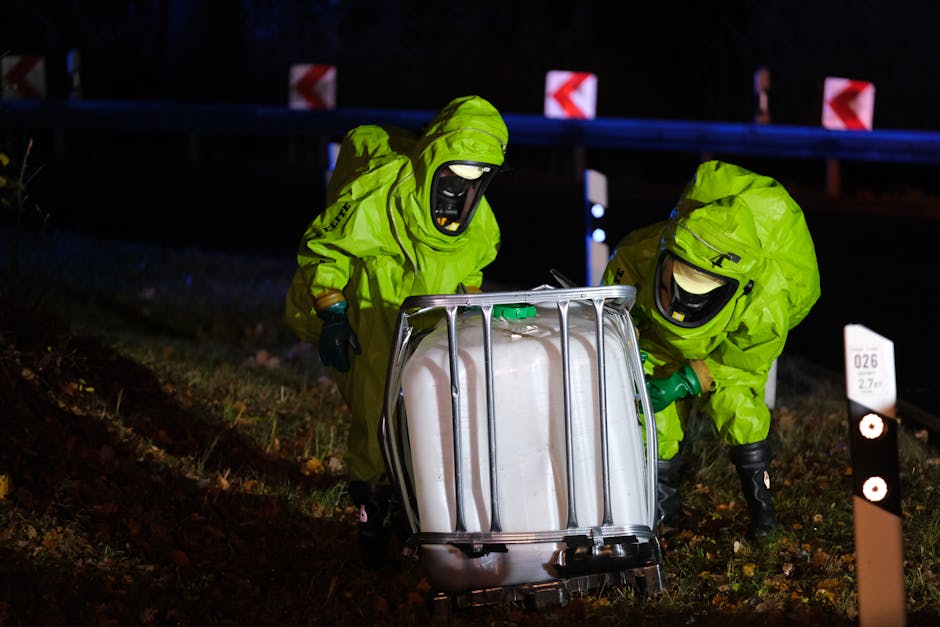
Why European governments need a unified CBRN strategy
Modern societies depend on the free movement of people, goods, and energy across borders. That openness also creates opportunities for malicious use of hazardous materials. Chemical, biological, radiological, and nuclear (CBRN) threats can arise from state actors, terrorist groups, or accidents involving industry and research facilities. Because CBRN incidents ignore national borders, European states have coordinated their preparation through a mix of EU legislation, NATO commitments, and national emergency plans.
The central aim of a European CBRN strategy is to ensure that, when an incident occurs, the response is fast, proportionate, and compatible across all member states. This reduces the chance of panic, limits casualties, and protects critical infrastructure such as transport hubs, power grids, and hospitals.
Key European bodies governing CBRN preparedness
- European Commission (EC) – develops EU-wide legislation, funds research, and coordinates cross‑border exercises.
- European Union Agency for Law Enforcement Cooperation (EU‑POL) – supports member‑state police in detecting and interdicting illicit CBRN materials.
- European Centre for Disease Prevention and Control (ECDC) – monitors infectious disease threats and advises on biological‑incident response.
- European Union Civil Protection Mechanism (EUCPM) – pools resources such as mobile labs, decontamination units, and medical teams for rapid deployment.
- NATO’s Allied Command Transformation (ACT) – aligns NATO and EU CBRN doctrines, runs joint training, and shares intelligence.
Legal framework that shapes planning
Europe’s CBRN preparedness rests on several overlapping legal instruments. The most influential are:
EU directives and regulations
- Directive 2008/68/EC (Transport of Dangerous Goods) – sets standards for moving hazardous substances by road, rail, inland waterway, and air.
- Regulation (EU) No 2021/821 (Chemical Weapons Convention Implementation) – requires member states to maintain national authorities that monitor, report, and enforce the CWC.
- Regulation (EU) 2022/206 (Radiation Protection) – establishes common limits for exposure, licensing of nuclear facilities, and requirements for emergency preparedness.
International conventions incorporated into national law
- Biological Weapons Convention (BWC)
- Convention on the Physical Protection of Nuclear Material (CPPNM)
- Geneva Protocol (chemical weapons)
Each member state transposes these obligations into national legislation, which the European Commission monitors for compliance.
National CBRN plans – the building blocks
While EU instruments provide the overarching rules, the day‑to‑day response is carried out by national agencies. Most countries follow a similar structure:
- Strategic Command – usually a ministry (e.g., Ministry of Interior, Defence, or Health) that authorises the overall response.
- Operational Coordination Centre – a 24/7 hub that receives alerts, activates resources, and communicates with regional authorities.
- Specialised Response Units – CBRN troops, hazmat teams, decontamination squads, and medical rapid‑response teams.
- Public Communication Office – provides accurate information to media and the public, aiming to prevent misinformation.
Countries such as Germany, France, the United Kingdom, and Sweden have well‑documented plans that are regularly exercised. Smaller states often rely on mutual‑aid agreements, whereby a neighboring country supplies specialised assets that would be too costly to keep permanently.
How risk is assessed and prioritised
Risk assessment combines three elements: threat, vulnerability, and consequence. European agencies use a mix of open‑source intelligence, classified data, and modelling tools.
- Threat intelligence – tracks proliferation of dual‑use chemicals, emerging pathogens, and illicit nuclear material movements.
- Vulnerability mapping – identifies high‑risk sites such as chemical plants, research labs, and major transport corridors.
- Consequence modeling – simulates dispersion of toxic clouds, spread of infectious agents, or radiation plumes to estimate potential casualties and economic impact.
The output is a risk matrix that guides where to allocate resources. For example, the EU has designated the Rhine and Danube basins as high‑risk zones for chemical releases because of the density of downstream industrial facilities.
Preparedness measures on the ground
Detection and early warning
Early detection saves lives. Europe operates a layered network:
- Fixed sensors at ports, airports, and border crossings detect CBRN signatures.
- Mobile units attached to police or customs patrols perform spot checks.
- Public health surveillance systems (e.g., ECDC’s Epidemic Intelligence) flag unusual disease patterns that could indicate a biological attack.
Protective equipment and stockpiles
Each member state maintains a strategic reserve of:
- Personal protective equipment (PPE) for responders – suits, respirators, and gloves.
- Medical countermeasures – antitoxins, antibiotics, antiviral drugs, and vaccines.
- Decontamination chemicals and absorbent materials.
The EU Civil Protection Mechanism coordinates the sharing of these stockpiles during a large‑scale event.
Training and joint exercises
Practical experience is essential. Regular exercises such as:
- EU‑CBRN 2023 – a multi‑national simulation of a chemical release in a major urban area.
- NATO’s Cold Will Series – focuses on nuclear incident response.
- ECDC’s Pandemic‑Ready drills – test coordination between health agencies and civil‑defence structures.
These events test communication protocols, command structures, and logistical chains. After each exercise, a “lessons‑learned” report identifies gaps and informs policy updates.
Cross‑border cooperation in practice
A CBRN incident rarely stays within a single jurisdiction. Europe has built mechanisms to ensure swift assistance:
- EU Emergency Response Coordination Centre (ERCC) – a single point of contact for member states requesting aid.
- Joint Rescue Coordination Centres (JRCCs) – manage search‑and‑rescue operations in shared airspace and maritime zones.
- Mutual‑Aid Agreements – legal arrangements that allow one country to send specialised teams into another without lengthy diplomatic clearance.
During the 2021 chlorine leak in the Netherlands, Dutch authorities activated the ERCC, which dispatched French hazmat units and German decontamination trucks. The coordinated response limited exposure to surrounding regions and demonstrated the value of pre‑arranged protocols.
Role of industry and the private sector
Industrial plants, pharmaceutical firms, and nuclear operators are required to integrate CBRN safety into their business continuity plans. Key obligations include:
- Maintaining inventory records of hazardous substances.
- Implementing real‑time monitoring and alarm systems.
- Training staff in emergency shutdown and evacuation.
- Participating in public‑private exercises organised by civil‑protection authorities.
Many large facilities also host on‑site response teams that can act before national services arrive. The EU’s Critical Infrastructure Protection directive encourages information sharing between operators and national authorities while respecting commercial confidentiality.
Public communication and crisis management
Effective messaging prevents panic and helps the public take appropriate protective actions. European guidelines recommend a three‑phase approach:
- Alert – concise notification of the incident, location, and immediate protective steps (e.g., “stay indoors, close windows”).
- Information – regular updates with credible sources, maps of affected zones, and advice on medical consultation.
- Recovery – instructions for decontamination, return to normal activities, and access to support services.
Governments use a mix of official websites, social media, SMS alerts, and traditional broadcast channels. The EU’s EU Alert System can push geo‑targeted warnings to mobile devices across member states within minutes.
Challenges and emerging issues
Even with robust structures, Europe faces ongoing hurdles:
- Technology convergence – synthetic biology and nanomaterials blur the line between conventional chemicals and novel biological threats.
- Resource disparity – smaller or newer EU members may lack the specialised equipment that larger states possess.
- Data sharing constraints – privacy laws sometimes limit the flow of health information needed for rapid outbreak detection.
- Climate change – extreme weather can damage storage facilities, increasing the risk of accidental releases.
Addressing these issues requires continuous investment, updated legislation, and a culture of shared responsibility.
Future directions for European CBRN planning
Looking ahead, Europe is strengthening three core areas:
- Integrated digital platforms – common data standards for sensor networks, GIS mapping, and real‑time incident dashboards.
- Resilience of supply chains – stockpiling critical medical countermeasures in multiple locations to avoid single‑point failures.
- Research collaboration – EU Horizon programmes fund projects on rapid detection kits, vaccine platforms, and decontamination technologies.
These initiatives aim to keep response times short, decisions evidence‑based, and public confidence high.
