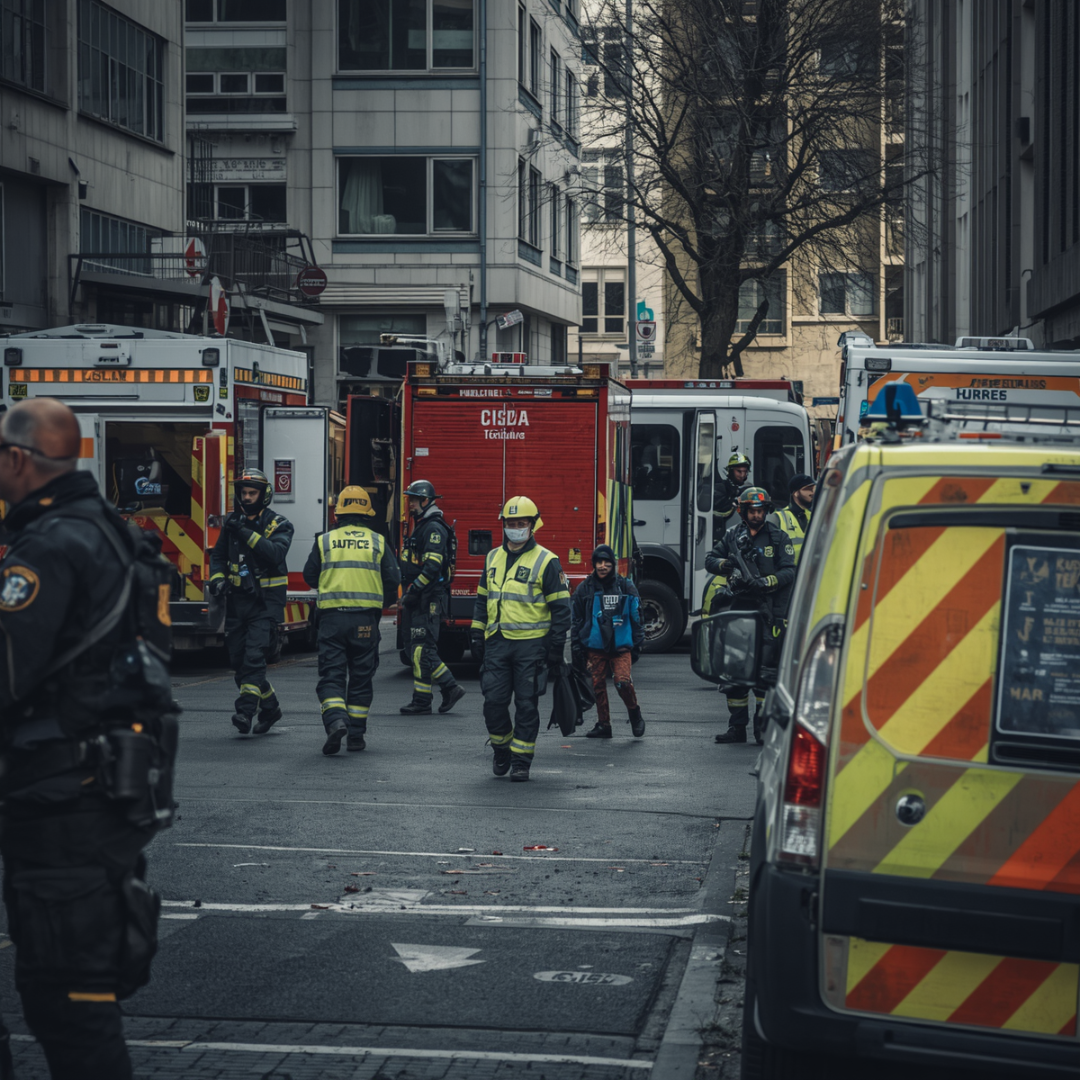
CBRN preparedness is the set of plans, capabilities, tools, and procedures used to prepare for chemical, biological, radiological, and nuclear incidents. In practice, it is about how institutions, emergency services, infrastructure operators, public authorities, and response systems reduce risk, improve coordination, and respond effectively when a hazardous incident happens.
The term may sound highly specialised, but the basic idea is straightforward. Some emergencies involve dangerous substances or agents that create unusual levels of uncertainty, contamination risk, operational complexity, and public concern. These incidents may be rare, but when they do occur, the consequences can be severe. That is why preparedness matters long before any real event takes place.
CBRN preparedness is not only about reacting to disaster. It also includes prevention, planning, training, detection, communication, protection, and recovery. A strong system is built before it is needed, not during the crisis itself.
What does CBRN stand for?
CBRN stands for chemical, biological, radiological, and nuclear. These categories are grouped together because they share some common response challenges, even though the substances, causes, and technical details differ. In each case, responders may need to manage uncertainty, exposure risk, protective measures, contamination control, public communication, and multi-agency coordination under pressure.
Chemical incidents may involve toxic industrial chemicals, weaponised agents, accidental releases, or dangerous fumes and spills. Biological incidents involve harmful pathogens, toxins, or contamination that can affect human, animal, or environmental health. Radiological incidents concern harmful radioactive materials, while nuclear incidents are associated with nuclear processes, facilities, or materials and may involve especially serious consequences.
Although these categories are distinct, the reason they are often discussed together is practical. The same systems of preparedness often need to support detection, command structures, protective decisions, public information, specialist response, and recovery across all four types.
Why is CBRN preparedness different from ordinary emergency planning?
Most emergency planning deals with disruption, risk, and coordination. CBRN incidents add another layer of difficulty because the threat may be invisible, unfamiliar, difficult to measure quickly, or dangerous to approach without specialised knowledge and equipment. That can slow decision-making and increase confusion during the most critical early phase of an incident.
There is also a strong operational challenge. Responders may need to identify the substance involved, assess its likely spread, protect themselves, isolate affected areas, communicate with the public, coordinate across agencies, and maintain control of the scene at the same time. If hospitals, transport systems, public venues, or critical infrastructure are involved, the problem quickly becomes broader than a single emergency-service task.
This is why CBRN preparedness depends so heavily on systems thinking. It is not enough to have one piece of equipment or one written plan. What matters is whether the different parts of the response system work together under pressure.
Are CBRN incidents only about terrorism?
No. CBRN preparedness is often discussed in connection with terrorism, but it is not limited to intentional attacks. Hazardous incidents can also result from industrial accidents, transport failures, storage problems, accidental contamination, technical breakdowns, or other non-deliberate events.
This broader framing is important because the response challenges often overlap even when the cause is different. A toxic release from an industrial accident may still require detection, protective equipment, decontamination, command coordination, public communication, and medical response. In that sense, CBRN preparedness supports resilience across more than one type of threat.
The original PRACTICE project reflected this wider understanding. Its integrated European approach was intended to support operational reaction following a CBRN crisis caused either by a terrorist act or by accident.
What does good CBRN preparedness include?
Good preparedness is layered. It includes risk assessment, scenario planning, detection capability, communication systems, command structures, protective equipment, decontamination procedures, training, exercises, and recovery planning. It also depends on whether organisations understand their roles before an incident takes place.
One of the most important elements is coordination. A CBRN incident may involve fire and rescue teams, police, emergency medical services, public-health authorities, local government, laboratories, transport operators, critical infrastructure managers, and national agencies. If these actors do not share information quickly and work from a common structure, response quality can decline fast.
Preparedness also includes the public dimension. In high-risk incidents, public trust and behaviour matter. Clear communication, credible instructions, and realistic preparedness messaging can reduce confusion and improve safety outcomes.
Why are training and exercises so important?
Training matters because CBRN incidents are uncommon enough that many responders may never face one directly until a real event happens. That means procedures cannot rely only on experience. Skills, coordination habits, and operational understanding often have to be built through structured training and repeated exercises.
Exercises help organisations test what looks good on paper but may fail in practice. They reveal weak communication links, unclear responsibilities, equipment gaps, timing problems, and unrealistic assumptions. In preparedness work, finding those weaknesses early is not a failure. It is one of the main goals.
This was a major part of the PRACTICE approach. The project developed not only tools and procedures, but also training kits for first responders, trainers, VIPs, and the general public, and it validated the toolbox through live exercises in realistic contexts.
What role do tools and technology play?
Technology is important, but it is not the whole answer. Detection systems, monitoring tools, modelling tools, protective equipment, communication platforms, and decision-support systems can all improve the quality and speed of response. But even strong tools are limited if they are not integrated into workable procedures and clear command structures.
The PRACTICE project was built around this exact insight. It aimed to reduce fragmentation by integrating more than 40 newly developed or improved tools into a single validated toolbox that could support crisis-management activities across the entire security cycle.
The lesson is still relevant today. In CBRN preparedness, technology matters most when it fits into training, workflows, communication, and institutional coordination rather than sitting in isolation as a technical purchase.
Why does critical infrastructure matter in this field?
CBRN preparedness is closely linked to critical infrastructure because many hazardous incidents can affect systems that societies depend on every day. Transport hubs, industrial sites, energy facilities, water systems, public buildings, logistics centres, and healthcare facilities all raise special planning questions when contamination, exposure, or hazardous release is involved.
Infrastructure environments are important not only because they may be targets or risk locations, but also because disruption there can multiply consequences. A hazardous incident in a busy transport network or an essential utility environment may affect movement, public confidence, service continuity, and cross-sector coordination all at once.
This is one reason modern resilience planning increasingly overlaps with CBRN planning. The better institutions understand the vulnerability and operational role of critical infrastructure, the stronger their preparedness framework tends to be.
How does preparedness connect to resilience?
Preparedness and resilience are closely related, but they are not exactly the same thing. Preparedness focuses on what is done in advance: planning, capability building, training, and equipment. Resilience is broader. It is about how well a system absorbs shock, adapts under pressure, continues essential functions, and recovers afterwards.
In a CBRN context, resilience means more than surviving the first phase of the incident. It also means restoring operations, supporting affected populations, managing public confidence, coordinating institutions, and learning from the event. Recovery is not an afterthought. It is part of the preparedness cycle from the beginning.
This wider perspective is one reason the topic remains so relevant. Strong systems are not judged only by whether they can respond, but by whether they can respond coherently and recover intelligently.
Why is CBRN preparedness still relevant today?
It remains relevant because hazardous risks have not disappeared, and because the environments affected by them have become more complex. Cities are dense, infrastructure systems are interconnected, industrial and transport chains are tightly linked, and public expectations of safety are high. Even a rare incident can produce outsized operational and political consequences.
It is also relevant because crisis management today depends heavily on interagency cooperation. Preparedness is no longer just about one specialist unit somewhere in the background. It involves the wider readiness of systems, institutions, and public communication structures.
European and international policy discussions continue to treat CBRN readiness as a live issue linked to civil protection, crisis response, and resilience. That means the field remains important not only for specialists, but also for anyone interested in how societies prepare for rare but severe emergencies.
What should readers take away from the term?
The main point is simple: CBRN preparedness is about making hazardous incidents less chaotic, less damaging, and easier to manage through planning, coordination, training, and integrated response capability. It is not about fear. It is about readiness.
It also helps explain why emergency response cannot rely on improvisation alone. The more complex the incident, the more important it becomes to have systems, roles, tools, and communication structures in place ahead of time.
That is why the subject matters now and for the future. CBRN events may be uncommon, but preparedness for them strengthens wider civil resilience, critical infrastructure protection, and public-safety capability as a whole.
This article is for informational purposes only and does not provide operational, medical, legal, or emergency-response advice.
